

Could Lower Wharfedale feed itself in fruit?
Alan Thornton, director of Fruit Works Co-operative, has the answers …

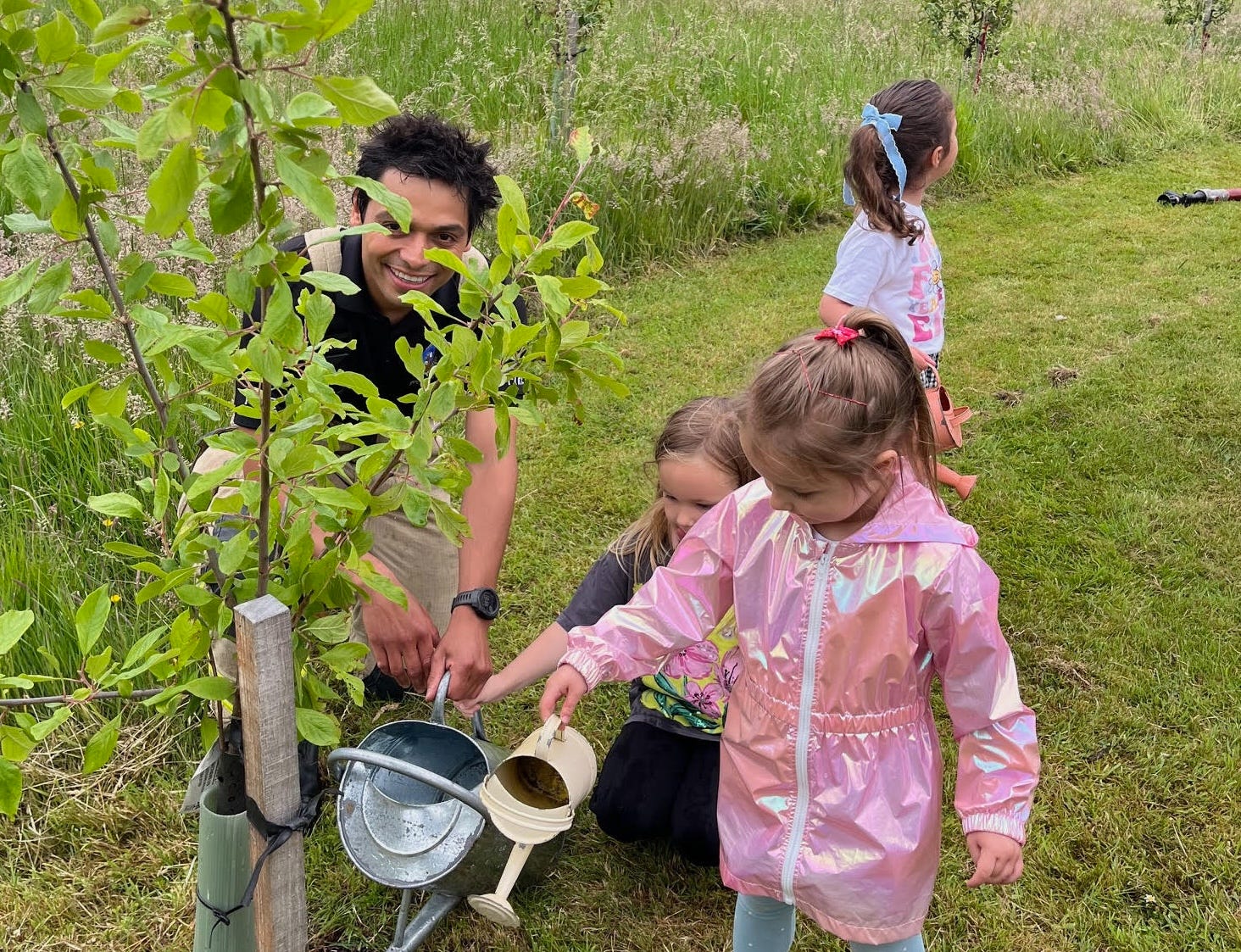
Our little social enterprise, Fruit Works, wants everyone in and around the Ilkley area to have picked fruit off a tree and eaten it. That’s a noble, romantic ambition, but how is that possible and why is that important?
For a start it’s been done before. There were fruit trees and orchards all over the valley if you look back a century or two. But now less than a fifth of the fruit eaten in Britain is grown in Britain (much of it in Kent) – and around 30% of all the apples grown in the UK go into Heineken-branded ciders!
We don’t need to get too xenophobic about fruit – the carbon footprint of your banana or orange is very low compared to anything dairy or meat, so let’s not say anything that might deter people from eating fruit. After all, most of us don’t eat our five-a-day, so let’s get people eating more fruit and veg, and not worry too much about where it comes from.
Fruit growing is easy – and sure, we would say that, but seriously, if you plant the right fruit tree or bush in the right place, it will need little care to give you an abundance of fruit for years to come. Often it’s the easy entry point to growing food yourself and gives people the confidence to move on to vegetables and other edible perennials.
More and more we are experiencing shocks to the global food system which remind us that growing our own food – or growing it locally – is more resilient. Climate change is making that more frequent.
Growing our own produce is much cheaper, too, and we take control of what chemicals are used. Plus, home-grown apples taste so much better than the Pink Lady apples we’re offered in Tesco!
There is a mantra in forestry: the right tree in the right place. But what does that mean? We are one of only two fruit tree nurseries in West Yorkshire and carefully grow a variety of trees on a range of rootstocks that won’t get too big for people’s gardens. With the right amount of space, some summer watering to get established, you can get your own apple tree growing without much effort.
In the early years, some careful winter pruning will help the tree establish itself in the right shape to support years of fruit production. We host affordable run courses to help you understand the basics of the 3 D’s and 2 C’s approach (that’s dead, dying and diseased and crossing and congested).
If you think that you’ll be too busy to prune your trees yourselves, worry not. You can also hire us for our professional fruit tree pruning service.
A great place to learn about fruit growing is the community orchards in the area. A great starting point is the stunning Church Orchard in Addingham. In Ilkley there’s one by the skatepark, one at Darwin Gardens and another at the fire station.
And at the far end, the Ben Rhydding Orchard is behind the newish Starbucks. Not a community orchard, but the pioneering Denton Reserve are in the process of planting hundreds of fruit trees for decades to come.
Earlier in the winter, we helped volunteers prune the Burley House Fields Orchard. And finally, Incommunities has planted an orchard at Derry Hill in Menston. Most of these have volunteer sessions to care for these beautiful places while learning skills you can use at home in your garden. Climate Action Ilkley are a good starting point. (There’s some fine orchards around Otley, but that’s for another journal!)
We’ve also planted more than 50 school orchards in other parts of the Bradford District, but only one in this area. These are growing into a living resource for children to learn about where food comes from. Ashlands and Menston schools grow fruit, but where else?
Last year was a bumper year for fruit. No late frosts and lots of sunshine meant the fruit set in a way we haven’t seen for years. With established fruit trees, the challenge becomes picking, using and distributing the fruit.
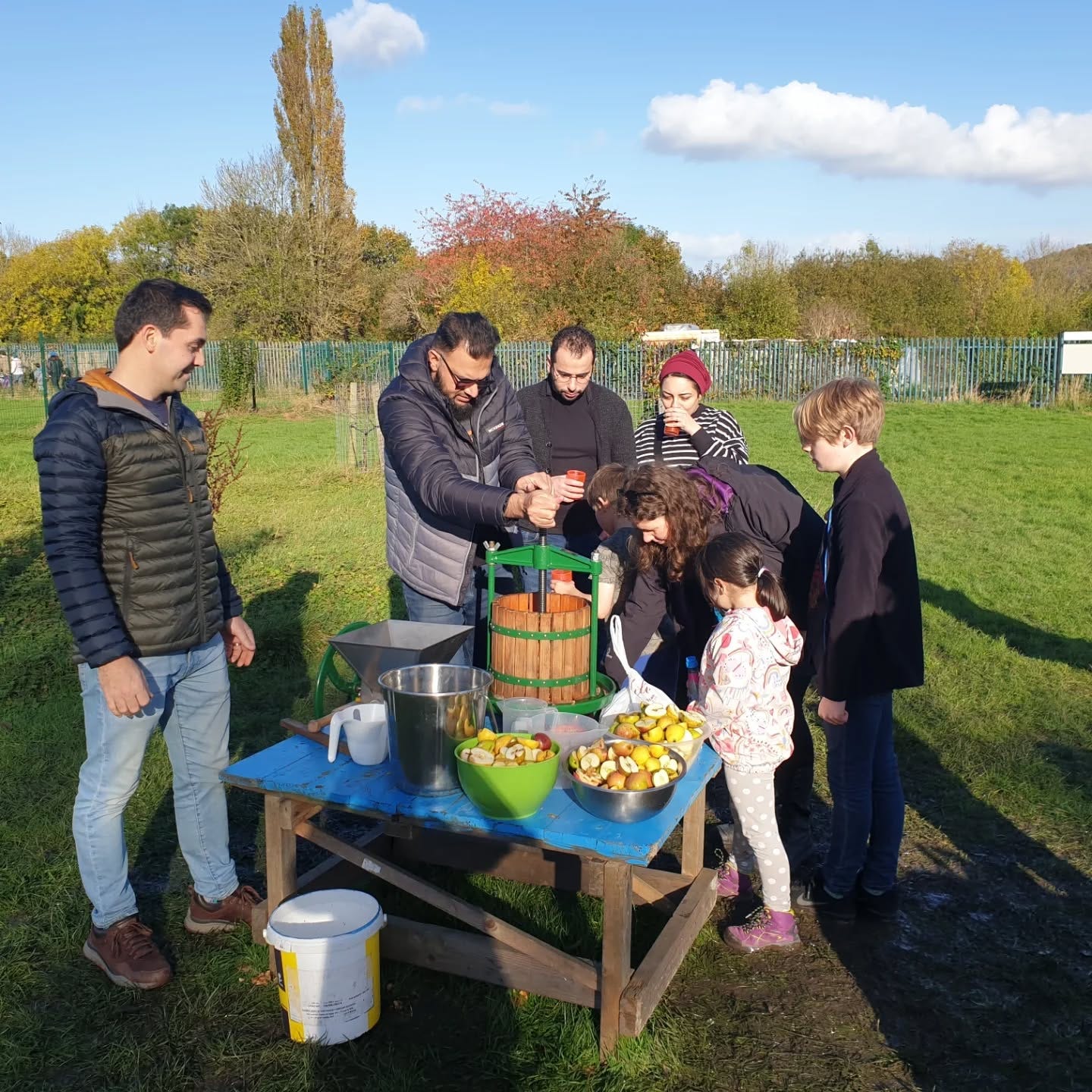
With a bit of careful planning your trees and bushes can give you fruit for half the year, from June onwards. Apart from eating the fruit fresh, you can cook it, freeze it, dry it, juice it, ferment it or store it. Every September, we run a course covering all those possibilities.
Fruit is not just for harvest season. We are rekindling some of the old orchard traditions of these lands, with Wassails in the winter, blossom celebrations and, of course, harvest celebrations and apple days. When coming together with our near neighbours in these natural places, we are doing what Wharfedale residents have been doing for centuries and millennia.
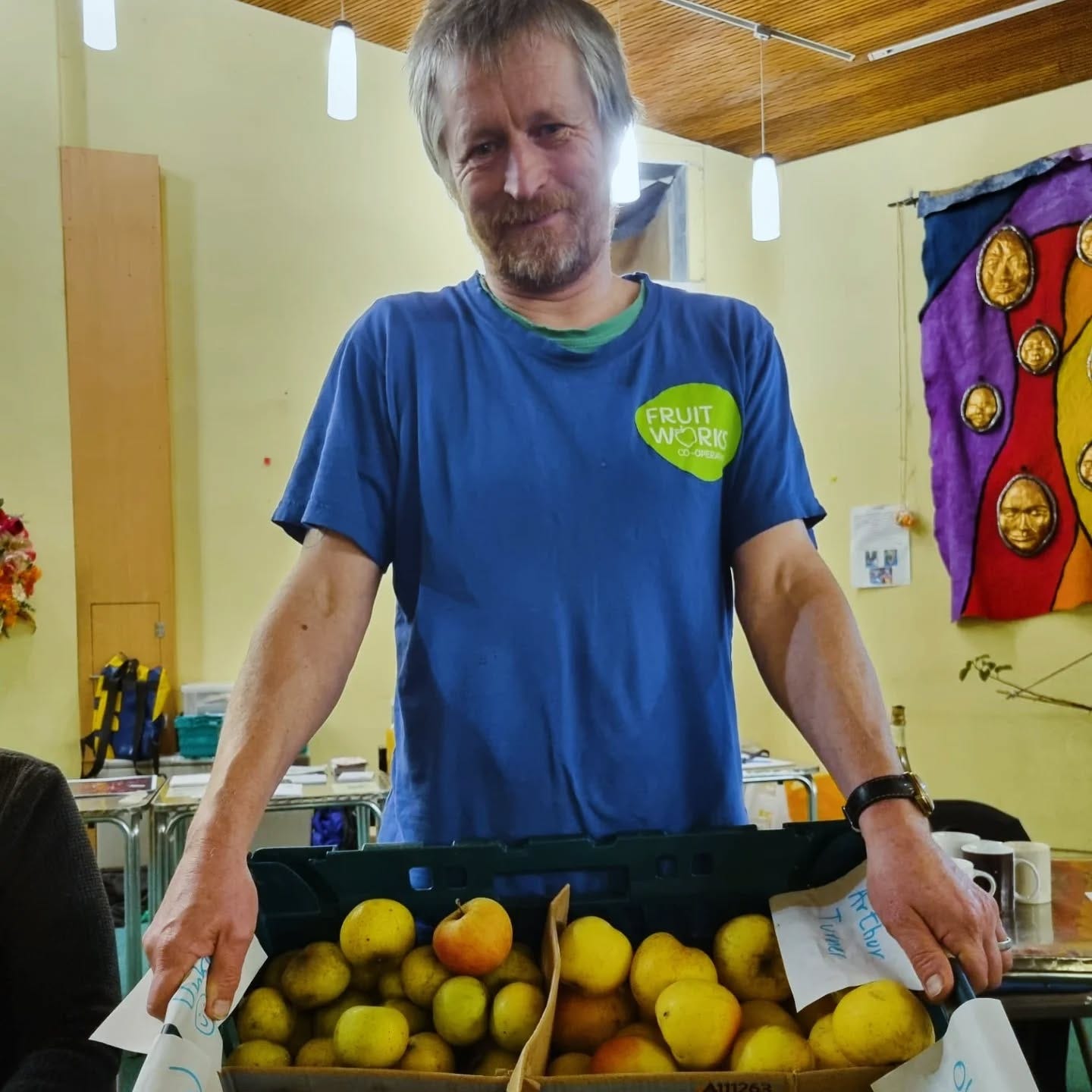
 | A guest post by
|
Lovely article with so much great information - thank you!
🍓
A appeal for common‑sense food.
Every year, British growers struggle to find enough pickers, and perfectly good fruit goes to waste. Meanwhile, supermarkets import fruit from thousands of miles away just to keep shelves full. It’s unnecessary, and it weakens our food security.
A simple national policy could help fix this.
If the government introduced a seasonal earnings allowance — letting people earn a small amount of short‑term income without being penalised — it would make seasonal farm work worthwhile again. Other countries already use similar schemes to protect their own food supply.
This isn’t complicated. It’s a practical step that would:
- Help British farms get their crops picked
- Reduce reliance on imports
- Strengthen the UK’s food security
- Keep more of our own produce on our own shelves
We should be eating the fruit we grow here at home. A small policy change would make that possible.