

Local figure to chair national grooming inquiry ...
... plus local MP's criticism of digital IDs, flu tidal wave mask requests, WYCA funding boost and more as we roundup some of the latest happenings in West Yorkshire 🗞️

LOCAL
Ilkley Town Council discusses performance and future of Ilkley Visitor Information Centre
The performance and future of the Ilkley Visitor Information Centre was discussed at the full Ilkley Town Council meeting earlier this month.
According to statistics seen by the councillors, footfall to the visitor centre, which is currently based in Ilkley Library – it used to be in the town hall – is down compared to 2024 numbers.
Councillors highlighted some of the challenges the visitor centre faces, such as poor signage, changing visitor habits – such as more people heading online for information – and a lack of vision and ambition for how a modern visitor centre should operate.
The councillors have decided to discuss the visitor centre further at the next full council meeting in January, including the possibility of setting up a working group to explore all options.
Keighley councillor up for young councillor of the year award
A Keighley town councillor has found himself on a shortlist for young councillor of the year at the Star Council Awards, which are hosted by the National Association of Local Councils (NALC).
Luke Maunsell, who represents the village of Oakworth – he first became a town councillor in 2015 – has been recognised for his “numerous initiatives to support residents and strengthen the community”.
This has included encouraging Bradford Council to restore second world war memorial stones in Holden Park, playing an important role in getting new Christmas lights installed and improving access for residents with limited mobility/disabilities.
“I am absolutely shocked and blown away to have been nominated, and now a finalist, in the Star Council Award for the ‘young councillor of the year’ category,” he said on Facebook.
“Whilst I am certainly pushing the definition of young, it really is touching and amazing to have been nominated … irrespective of this nomination or the outcome in February, I look forward to hopefully continuing to serve Oakworth, this town and beyond, for a long while yet.”
During his time as a town councillor, Maunsell has served as mayor (the youngest ever for Keighley Town Council in fact) and deputy mayor.
You can find out more about his achievements here.
Nominations for local hero in Ilkley now open
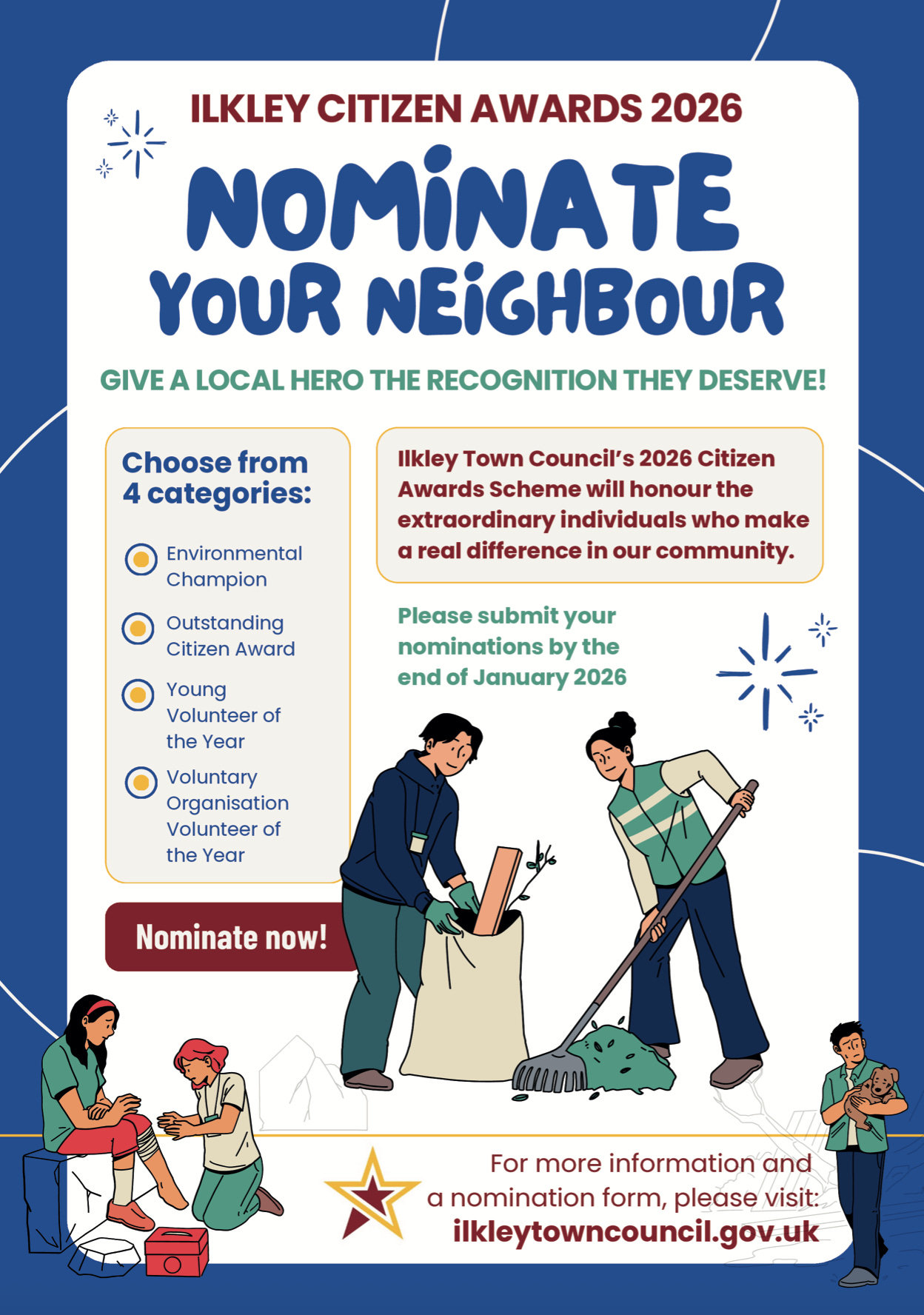
Locals are being encouraged to nominate someone for Ilkley Town Council’s Citizen Awards for 2026.
Names can be put forward for the voluntary organisation volunteer of the year, the young volunteer of the year, the environmental champion of the year and the outstanding citizen of the year.
“This scheme is all about celebrating what makes Ilkley so special – the people,” commented Jane Gibson, mayor of Ilkley Town Council.
“We want people to nominate the unsung heroes of our community, shining a spotlight on those people who quietly improve and enrich the lives of those around them.”
The closing date for the nominations is 31 January 2026. Winners will be presented with their awards at the annual town meeting on 18 March.
Last year, Mary Heathcote, who has given 40 years of her life to volunteering, was named as an outstanding citizen, while Noah Markham picked up the young volunteer of the year award and Karen Shackleton picked up the gong for environmental champion.
“It is inspiring to see the commitment and kindness of so many individuals in Ilkley,” Gibson said earlier this year at the inaugural Citizen Awards, which were held at the Clarke Foley Community Hub.
“The Citizen Awards are a small way of saying thank you for their efforts, and we are grateful to Ilkley BID and Bettys for helping to make this celebration possible.”
You can go ahead and nominate someone here.
DISTRICT
Flu “tidal wave”: Bradford Royal Infirmary urges patients and visitors to wear masks
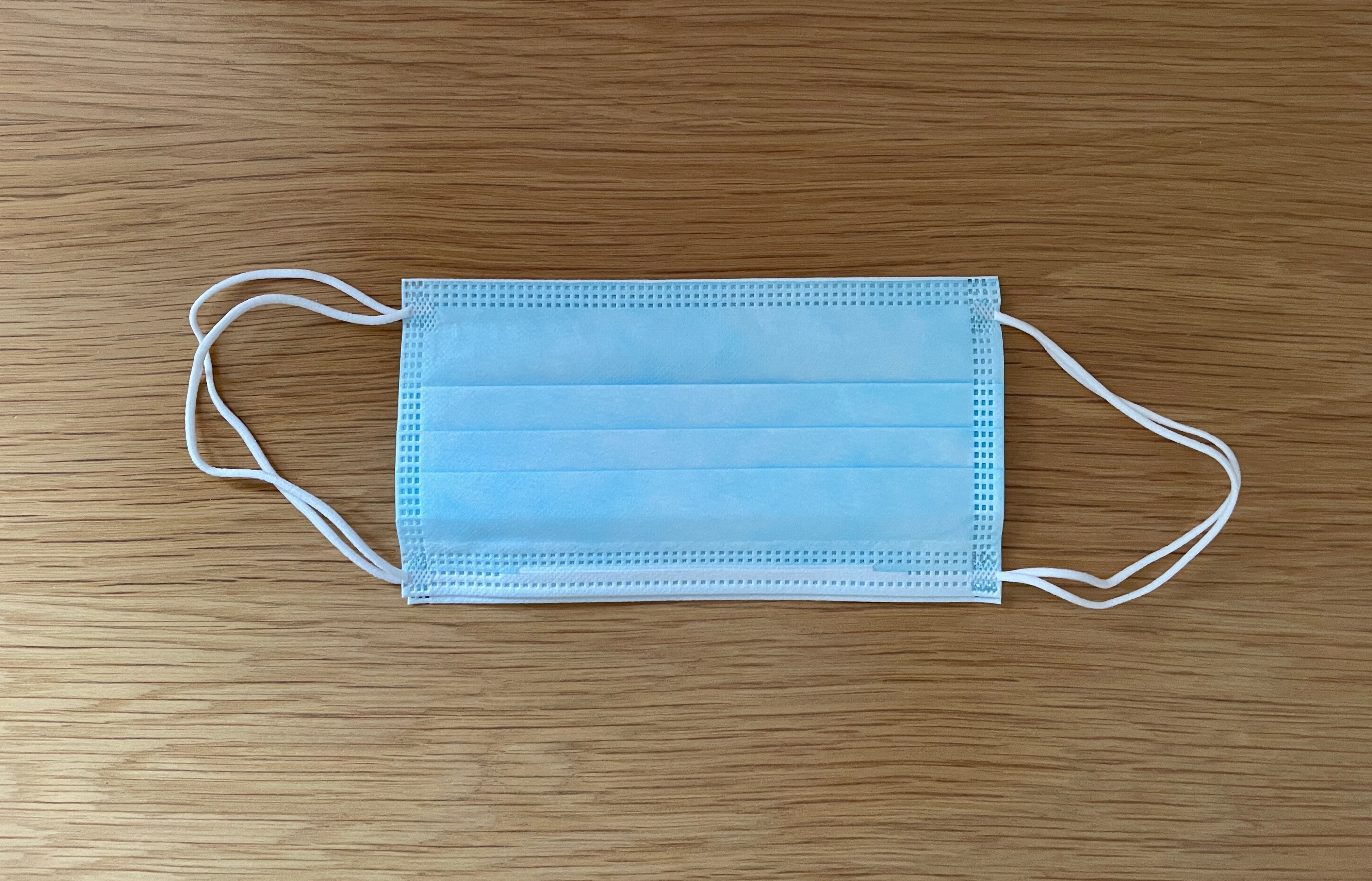
Bradford Royal Infirmary is asking all patients and visitors to wear face masks in clinical areas as it deals with the challenge of what NHS England has described as a winter “flu-demic”.
The hospital advised that masks be worn especially in clinical areas, with staff leading the way by covering their faces as they did during the Covid-19 pandemic.
“Both locally and nationally the NHS is seeing an early wave of flu and respiratory illness, with many patients with severe symptoms being admitted to hospital,” Bradford Royal Infirmary explained.
“Masks will be available on wards and clinical areas, like the emergency department.”
Bradford Royal Infirmary added that one of the best ways to protect yourself is to get a flu jab.
Eligible people include primary and secondary school children, everyone aged 65 and over, pregnant women and individuals under 65 with long-term health conditions (see here for more).
The health service is bracing for an unprecedented flu wave this winter,” said professor Julian Redhead, national medical director for urgent and emergency care at NHS England. “Cases are incredibly high for this time of year and there is no peak in sight yet.
“The NHS has prepared earlier for winter than ever before, but despite that we know that ballooning flu cases coinciding with strikes may stretch our staff close to breaking point in the coming weeks.”
Airedale NHS Foundation Trust has also called on masks to be worn in the emergency department, acute assessment unit, ICU, outpatients and in children’s and respiratory wards.
Lianne Robinson, chief nurse at the hospital, said the number of patients with flu was increasing and called on eligible people to get the flu vaccine.
“The hospital is very busy and our bed capacity fluctuates daily, but our teams continue to work incredibly hard to look after our patients and provide high quality care,” she added.
Bradford District to benefit from expansion of places for SEND pupils
Bradford Council has announced a big expansion of places for pupils with special educational needs and disabilities (SEND) across the district, which is being funded by a government grant.
The executive agreed in early December to create an extra 450 places for SEND pupils in areas that most need them. The Department of Education is providing Bradford with around £22.5 million to fund this.
“Agreeing these proposals to expand special school places is essential given the projected increase in the number of children with SEND,” said Sue Duffy, portfolio holder for children and families at Bradford Council.
“Officers have worked hard with headteachers to identify where places will be needed and the most effective way to create them so schools can provide the best education possible.”
There was a notable change in SEND spending announced in the Budget last month, which is intended to ease pressures on councils.
From 2028–29, the government “will meet the full cost of SEND provision from departmental spending budgets,” the Institute for Fiscal Studies explained.
“This means that central government will be taking over the risk of spending running ahead of planned funding (removing this risk from local councils).”
CONSTITUENCY
Digital IDs will “lead to a surveillance that even Orwell’s 1984 couldn’t have predicted”
Conservative MP Robbie Moore launched a scathing attack on the Labour government’s proposals to introduce mandatory digital IDs at an e-petition debate with fellow members of parliament, suggesting that it would be worse than the nightmarish vision of the future imagined by George Orwell.
The MP for Keighley and Ilkley, who opened the debate on behalf of the Petitions Committee on Monday 8 December, said that along with the increasing digitisation of life, from powerful digital databases and widespread facial recognition software to the “looming prospect of a central bank’s digital currencies”, digital IDs would create an all-encompassing digital surveillance state” that even Orwell’s 1984 “could not predict”.
“In every aspect of public life, we give over our data with consent,” he went on to say. “Yet digital ID turns that notion on its head, insisting that we hand over data to simply function in society, and potentially for reasons to which we cannot consent in advance.”
Moore also criticised the government’s rationale for rolling out digital IDs, claiming that it isn’t about stopping the boats – Labour has said it is designed to help tackle illegal migration, as well as making accessing various and vital government services easier – but about “more government and state control”.
“If the real target is people who are here illegally, why on earth do 67 million British citizens who already have national insurance numbers, passports, driving licences and birth certificates need to be dragged into a brand-new compulsory database as well?” the MP asked.
“What exactly is it about stopping the crisis of inflatable dinghies in the channel that requires your son, your daughter, your dad or your 90-year-old grandma to hand over their data and facial geometry to the Home Office server?”
The Labour government announced its plan for digital IDs, which didn’t feature at all in its 2024 manifesto for “change”, back in September, with the prime minister, Keir Starmer, arguing that it would make it harder for people to work illegally in the UK, which would also make “our borders more secure”.
Writing in response to the announcement, Cat MacLean, policy advisor to the executive director of the Good Law Project, described it as a “panic button” response to Reform UK’s “constant drumbeat on migration” and to its own internal problems.
“Let’s be clear: digital ID will not stop irregular migration to the UK,” she continued. “The cards that are widely used in the EU haven’t stopped irregular work and migration. In fact, the informal economy in the UK is smaller than in France or Italy, which both use ID cards, and is overall lower than the European average.”
Nearly three million people have signed the “do not introduce digital ID cards” petition, which opposes the creation of “any national ID system”.
At the time of writing, 4,430 people in Moore’s constituency of Keighley and Ilkley have signed the petition, 3,935 have signed it in Bradford East (represented by Labour’s Imran Hussain), 3,207 have signed it in Leeds Central and Headingley (represented by Labour’s Alex Sobel) and 4,515 have signed it in Shipley (represented by Labour’s Anna Dixon).
Local MP claims government is “failing to preserve” grooming gang records
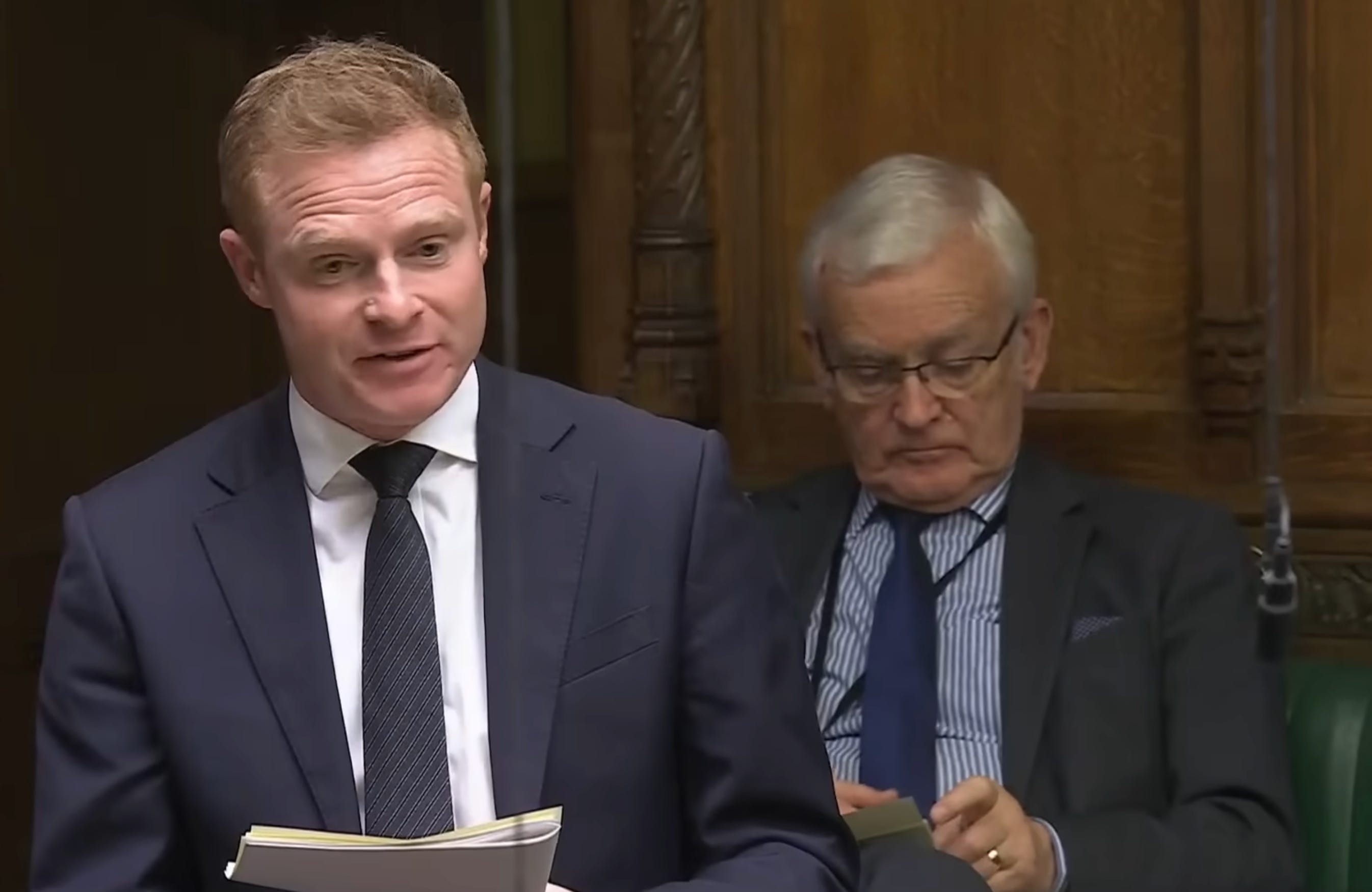
The MP for Keighley and Ilkley has accused the Labour government of having already failed to ensure that grooming gang records are preserved ahead of a national inquiry being launched.
Clarifying his remarks, Robbie Moore claimed that, according to his own research, the government has not yet issued critical instructions to local authorities, police forces, and other relevant agencies to ensure that records are not destroyed.
This, he went on to say, was outlined by the crossbench peer Louise Casey in her recent audit.
Under step two of recommendation two – launching a national inquiry, made up of a coordinated series of targeted investigations into child sexual exploitation (CSE) – it’s advised that all records should be preserved.
Moore said in a video posted to social media that a freedom of information request to West Yorkshire Police “to see these instructions or directives” has resulted in a response from the police force that it “did not hold any recorded information” in relation to his request.
He added that Bradford Children and Families Trust had also confirmed that “no such instruction exists”.
“In other words, six months on the very first safeguard recommended by Baroness Casey is already being ignored by this government,” he continued.
“I am calling on the government to act right now, because if relevant documents are lost due to data retention policies, or, in the worst case, destroyed by those who are complicit, all because the government failed to give the basic instruction, that failure will never be forgotten.”
Commenting on a tweet/x by the far-right activist Tommy Robinson, which claimed that had people not taken to the streets, MPs like Moore “would still be silent”, local CSE survivor Fiona Goddard said that Moore had been actively speaking out about grooming gangs since 2019.
“Me and him have done a lot of work over the years around Bradford being central to the grooming gang scandal,” she explained.
“Every other MP and councillor ignored me but he replied and took it on without a second thought … The only other MP that’s done more than him in my eyes is Ann Cryer.
“I have the utmost respect for both and will always speak up about how much work both of them have done in relation to this matter.”
COUNTY
WYCA to receive £2 billion integrated funding boost from government
West Yorkshire Combined Authority (WYCA) will receive close to £2 billion up until 2030 as part of the Labour government’s plans to provide strategic authorities with integrated settlements to power the “devolution revolution”.
Announced as part of the measures outlined in the English Devolution White Paper last year, integrated settlements consolidate numerous different funding streams across housing, transport, skills and more into one single pot.
This provides strategic authorities like the WYCA with even greater flexibility and power in managing bigger budgets over a longer period of time.
“This is a historic moment for devolution in West Yorkshire,” said Tracy Brabin, mayor of the WYCA. “Our integrated settlement gives us the flexibility and certainty we need to invest in the things that really matter to local people – better transport, more affordable homes, skills for life and work, and support for businesses to grow and thrive.”
The region will receive £397.8 million in 2026/27, £473.9 million in 2027/28, £559.8 million in 2028/29 and £530.9 million in 2029/30 to deliver on its ambitious local growth plan.
Broken down, around £200 million a year will go towards major transport infrastructure projects, £190 million will be earmarked for housing and strategic planning initiatives and £85 million a year will be spent on boosting adult skills and employment support.
A budget paper is set to be presented to the WYCA in early 2026 outlining in full how the integrated settlement will be spent and how best to take advantage of the flexibilities it affords strategic authorities (aka combined authorities).
The Institute for Government welcomed the Budget announcement by the chancellor, Rachel Reeves, but said that it needed to go further if it was to properly decentralise power away from Whitehall.
“Introducing more local taxation powers would, for example, further strengthen autonomy,” it said. “Better accountability mechanisms for the integrated settlement are also needed that can safeguard public money without imposing rigid output metrics that risk constraining local decision making.”
Yorkshire Water ends hosepipe ban
Yorkshire Water has announced that the hosepipe ban it introduced in July has finally been lifted.
It said that with reservoir levels now over 90% – above average for the time of year, too (usually 85%) – there was no longer any need to keep restrictions in place.
Yorkshire Water introduced the ban following the driest spring in England in over 132 years, which resulted in the region experiencing drought.
“While the restrictions are lifting it is important people continue to think about their water usage and consider using water wisely throughout the year, not just during periods of drought and hot weather,” said Dave Kaye, director of water and wastewater at Yorkshire Water.
In September, Yorkshire Water revealed that its reservoirs had experienced their largest weekly increase in water in over 30 years, with heavy rains helping to top up depleted levels.
“While the increase in reservoir and groundwater stocks is positive and very welcome after the driest summer on record, our stocks are still well below where they should be at this time of year,” Dave Kaye, director of water services at Yorkshire Water, commented at the time.
“We hope the reservoirs and groundwater will continue to recover through the autumn and winter months so we’re in a good position entering 2026.”
NATIONAL
Local figure appointed as chair of the national Independent Inquiry into Grooming Gangs
The former Children’s Commissioner, Anne Longfield, who lives in Ilkley – and who grew up on a farm in The Chevin near the West Yorkshire town of Otley – has been announced as the chair of the national Independent Inquiry into Grooming Gangs.
Longfield will head up a three-person panel to look into how and why young people were let down by statutory services “time and again by the very people who should have protected them”.
Longfield, who was made a Labour peer earlier this year – she has resigned the party whip on appointment – has an extensive and senior background in working for children’s organisations.
Announcing the appointment of the chair and the all-women, three-person panel, which includes Zoë Billingham and Eleanor Kelly, the home secretary Shabana Mahmood said that the inquiry “will shine a bright light on this dark moment in our history”.
Longfield was also recently a board member of the Bradford Children and Families Trust (BCFT). She stepped away from the role in January “due to gaining her seat in the House of Lords and the commitments the role brings”, the trust told us in an email.
She was named as one of the five non-executive director board members of the BCFT back in 2022 in the run-up to the trust officially taking over children’s services from Bradford Council, after the latter was slammed for serious and ongoing failures to deliver a meaningful service fit for purpose.
It is unclear yet whether the appointment of Longfield will guarantee a targeted and focused local inquiry in the Bradford District (comprising Bradford East, Bradford West, Bradford South, Shipley and Keighley).
Local politicians have long been campaigning for this, from Labour’s Ann Cryer in the early noughties to the Conservatives’ Robbie Moore more recently. With her connection to the area, there’s hope that a long overdue local investigation will take place.
Speaking to ITV earlier this year, Ann’s son John, who had followed his parents into a life of politics as an MP – his father was the MP Bob Cryer – suggested that there had been a cover-up at a local level.
“It wouldn’t surprise me if one of the worst places turns out to be Bradford and it needs to be examined as part of this inquiry,” he told the broadcaster.
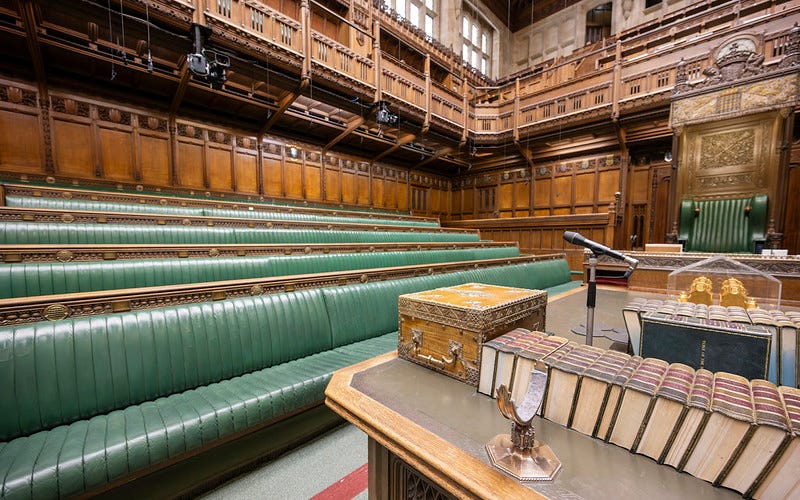
Responding in the House of Commons to Mahmood’s statement on the inquiry, Moore, who has represented Keighley and Ilkley since 2019, urged her to launch a local inquiry in the area.
Replying to Moore, Mahmood said that he made a “very strong and powerful case” for the inclusion of the Bradford District but that she couldn’t make any commitments on Longfield’s behalf. So far only Oldham has been named as one of the local areas.
Responding to news that Longfield would be chairing the inquiry, the prominent child sexual exploitation campaigner (and survivor), Fiona Goddard, and a former member of the inquiry’s victims and survivors liaison panel, expressed her disappointment on Twitter/X.
“This is not an independent inquiry ... how can it be independent of the government if the person chairing it is a former Labour government member and a peer in the House of Lords representing Labour?” she said.
“Let’s not forget either that the remaining members of the survivor panel set up to be consulted on the independent chair assignment have not been consulted at all on the chair. They have been overlooked and just used to give the impression of victim engagement without actually being involved.
“The government clearly wants to control the narrative. There is no other explanation. I’m completely disheartened.”