

(Un)Layering the Future Past of South Asia: Young Artists’ Voices
A new exhibition at Cartwright Hall brings together 12 artists from Afghanistan, Bangladesh, India, Pakistan and Sri Lanka.

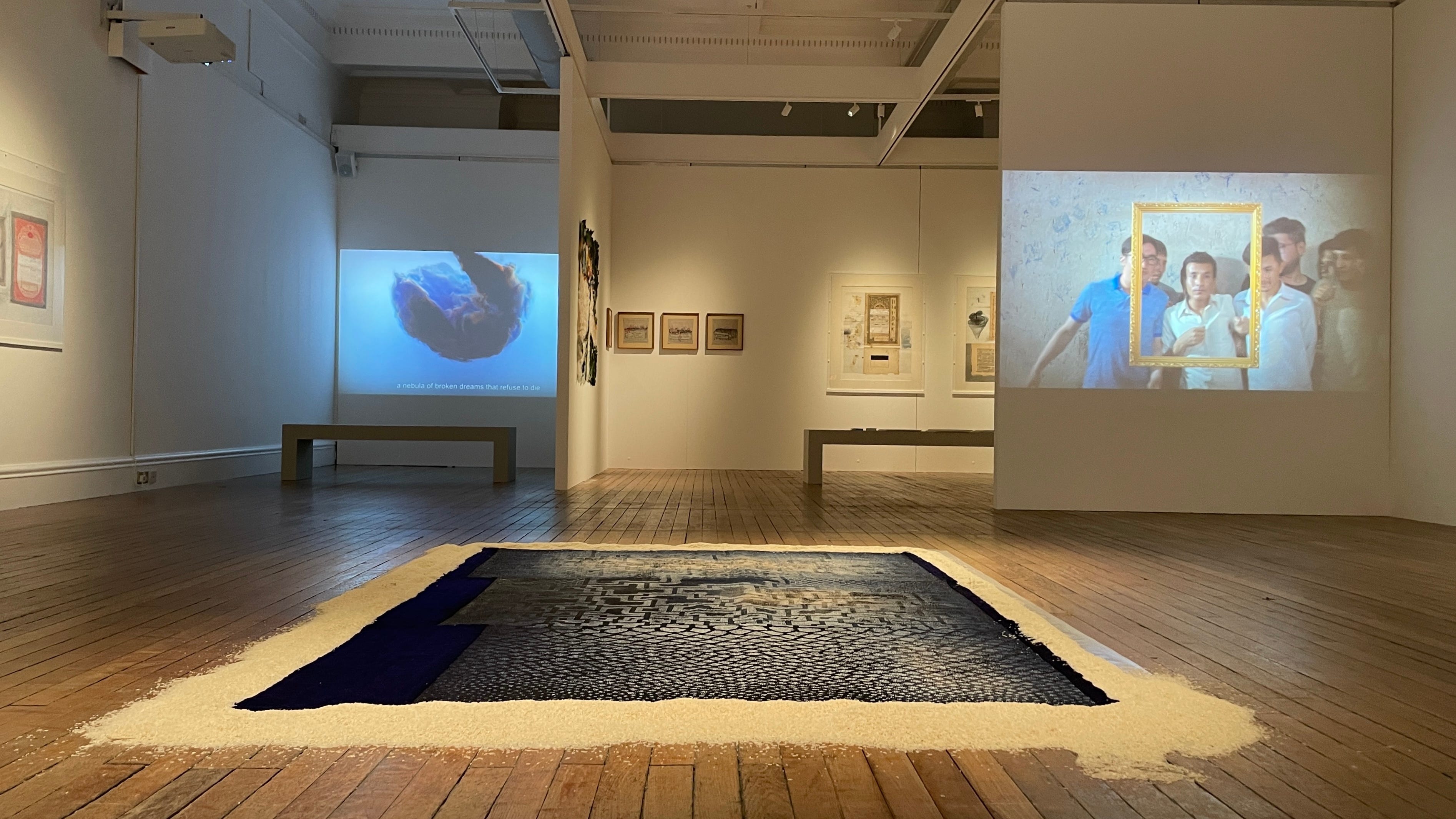
The shared histories, identities, and preoccupations of a generation of young South Asian artists are presented and explored in a thoughtful new exhibition at Cartwright Hall that has been specifically developed for Bradford by its curators Salima Hashmi and Manmeet K. Walia (a previous version was shown last year at the SOAS Gallery in London).
Featuring 12 artists from Afghanistan, Bangladesh, India, Pakistan and Sri Lanka respectively, (Un)Layering the Future Past of South Asia: Young Artists’ Voices adopts a regional perspective to reveal common threads, experiences and perspectives that transcend distinct and often tense national boundaries to convey unique narratives that are nevertheless inextricably rooted to a particular place and time.
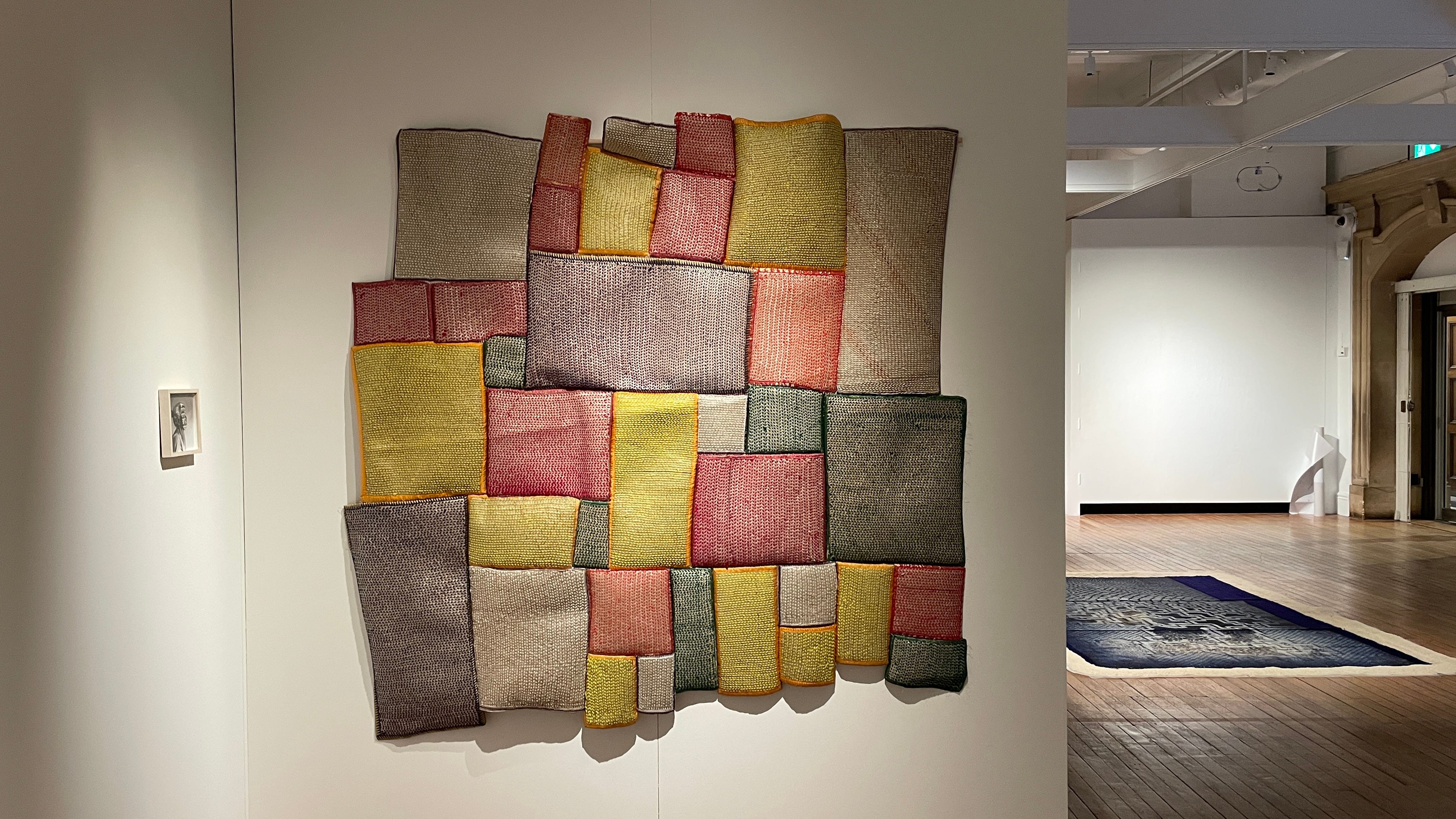
Consider one of the two works that make up Ashfika Rahman’s Reddem, a Tetris-like patchwork of colourful stitching. At a glance there is nothing that reveals the geographical provenance of the work and it could have emerged anywhere in South Asia (and beyond). It’s only on closer inspection that you discover that it uses shital pati as its main material, a fabric that is handmade by the Oraon community.
The same visual ambiguity can be seen in Ghulam Mohammad’s Bazm (Assembly), and Hisaar (Garrison), which, from a distance, look like miniature Mark Rothko paintings but are in fact collages made up of individual Urdu scripts that deconstruct the lingua franca of Pakistan and layers them over one another in an unintelligible way.
So too in Purvai Rai’s Grain by Grain, which, from afar, looks like a blue-hued Asian rug with white fringes, but is anything but. As you move closer to the work, it becomes clear that what was understood to be fringes is in fact basmati rice and that the central portion – which is technically called a field when considering the composition of a rug – is made up of three embroidered panels that appear to depict the transition of fertile land to soil cracks. We’re told that “the visual recession mirrors the depletion of Punjab’s aquifers”.
As you’ll no doubt have ascertained, a lot is going on in the exhibition, with layers and layers of meaning from one artwork to the next waiting to be unpeeled – and all astonishingly contained in just one room, which also makes for an intimate experience, as if in metaphorical sense you’ve been transported to South Asia, where you can travel from one country to the next even though you might not be fully cognizant to it.
All of it is easy to miss, especially if you’re more inclined to sail through a gallery than to patiently explore a given work of art, you feel out of your comfort zone (the complexity of the title, for instance, can be seen to be problematic even if you do think art should at times be intellectually challening) or you have no or minimal interest in art.
And this really is an exhibition that demands both your attention and your time. If the multitude of voices from South Asia are going to be properly heard and understood, they need to be, figuratively speaking, listened to attentively.
Otherwise, when you see Maheen Kazim’s But It Is Only Evening hanging from the ceiling, all you have is the image and the form – two hanging, handwoven, patterned fabrics – to work with and nothing else. However, “to look closely [at the work] is to sense the passage of time held within the fabric”, as the accompanying booklet notes. It also explains that Kazim also works with local weavers, a fact that can’t be extrapolated from the work alone (which, incidentally, melds the traditional with the contemporary).
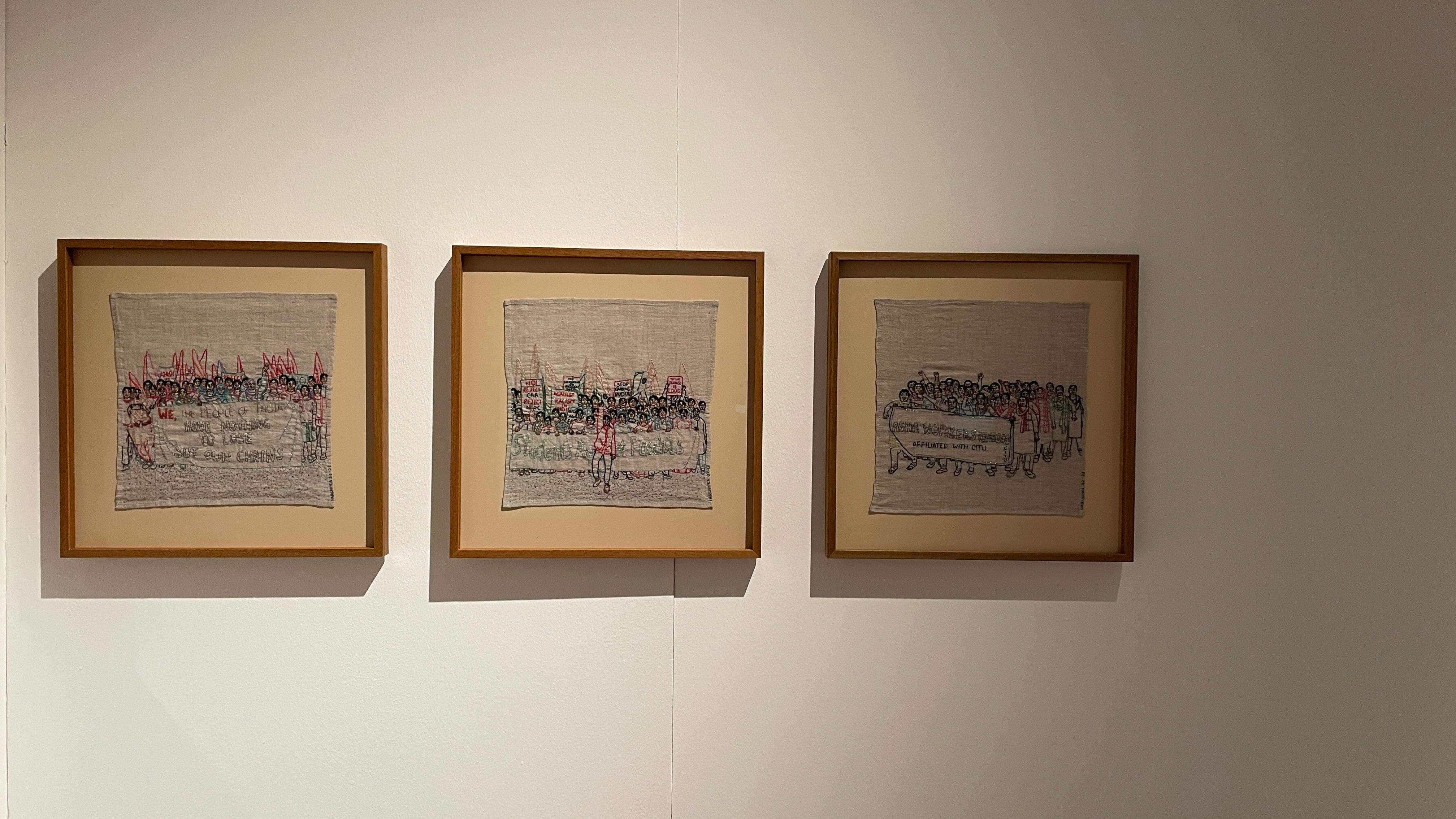
That’s not to say you can’t enjoy or take pleasure in the works as aesthetics rather than as concepts. Varunika Saraf’s The Longest Revolution, for example, which directly references the psychoanalyst Juliet Mitchell’s essay of the same name to trace “a lineage of women’s movements in India” are eye-catching in their own right), while Hadi Rahnaward’s Tilatilaa, which features men jostling to occupy the primacy of a gold frame that appears suspended in the air, is fun to watch in the absence of any context (such as a pre-Taliban return to power exploration of “the fragile boundary between order and chaos”).
But if you really want to do the works justice and discover more about South Asia and the preoccupations and interests of artists born in the eighties and nineties – who are both interpreting the future past of yesterday and establishing a future past for discovery tomorrow … well, at least we think (we’ll leave that small headache as a parting gift) – then you’ll do well to not only spend a generous amount of time in the gallery but also beyond the walls of the baroque building itself.
Here you can discover more about Moonis Ahmad beyond Echographies of the Invisible, a surreal, sci-fi, video game meditation on the strangeness of time – his website bio reads: “his workconjures the afterlives of the dead and the deceased as a means to speculate the emergence of counter-worlds that challenge established states of power at the margins” – and Kubra Khademi, whose work explores her own life as a woman in Afghanistan and now as an exile in France (the show features work from the La Fille et le Dragon series).
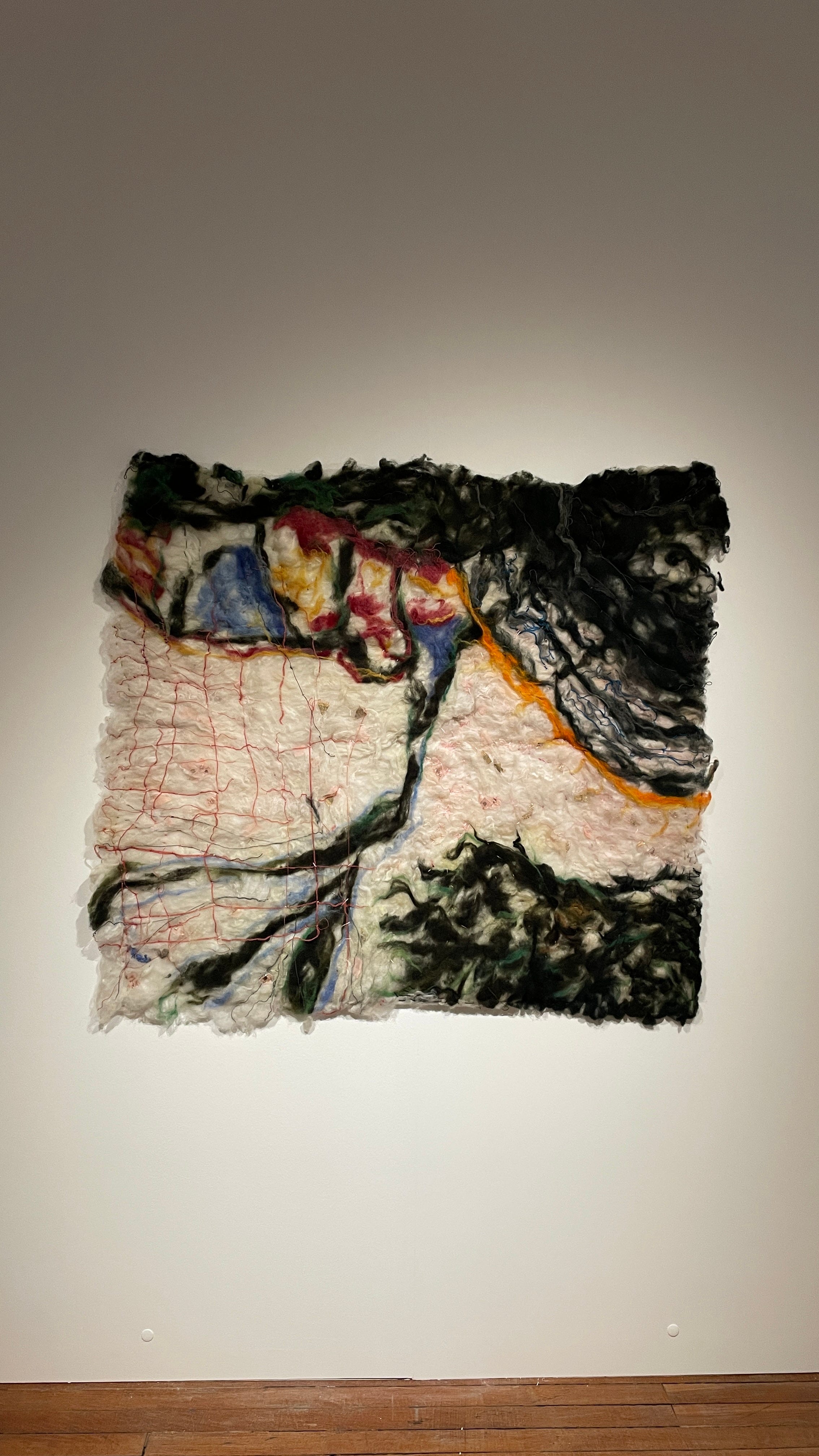
Likewise we can also discover more about T. Vinoja (Sea and Land), Rinoshan Susiman (When I Was 16), Aisha Abid Hussain (Lived Realities Series I, II and II) and Hema Shironi (My Family is Not on the List) and learn more about how this generation of contemporary artists is navigating the complexities of the past, present and future realities of their respective homes – for the most part, as some of the artists are now displaced – at a time where interest in South Asian art, intellectually and commercially, continues to expand within the region itself and globally (re: the latter, M.F. Husain’s Untitled (Gram Yatra) made history last year when it became the first Indian modern work of art to break the $10 million mark at auction).
Trust us. You won’t regret it. Away from the passive exchange of our time for hollow, algorithmically generated dopamine hits, a more active and challenging investment of your minutes, hours and days is a far, far richer way to live. At least we like to think so.
(Un)Layering the Future Past of South Asia: Young Artists’ Voices at Cartwright Hall runs from Friday 28 March 2026 to Monday 31 August 2026.


